The 10 Types of Ad Creatives That Work Best on Meta in 2026
Which formats and creative types generate the most conversions on Meta Ads in 2026? A comparison of the 10 best-performing creatives: UGC, product demo, before/after, testimonial, shock hook and much more, with examples and benchmarks.
SociaLover Team · Updated · 16 min read
The Meta ad creatives that convert best in 2026 are UGC-style video, product demos and before/after, followed by testimonials and problem hooks. Static images still drive a majority of conversions in many accounts (60 to 70% according to GetHookd, 2026), so the winning mix is a test batch of one format per mechanism: proof, demonstration, attention, desire.
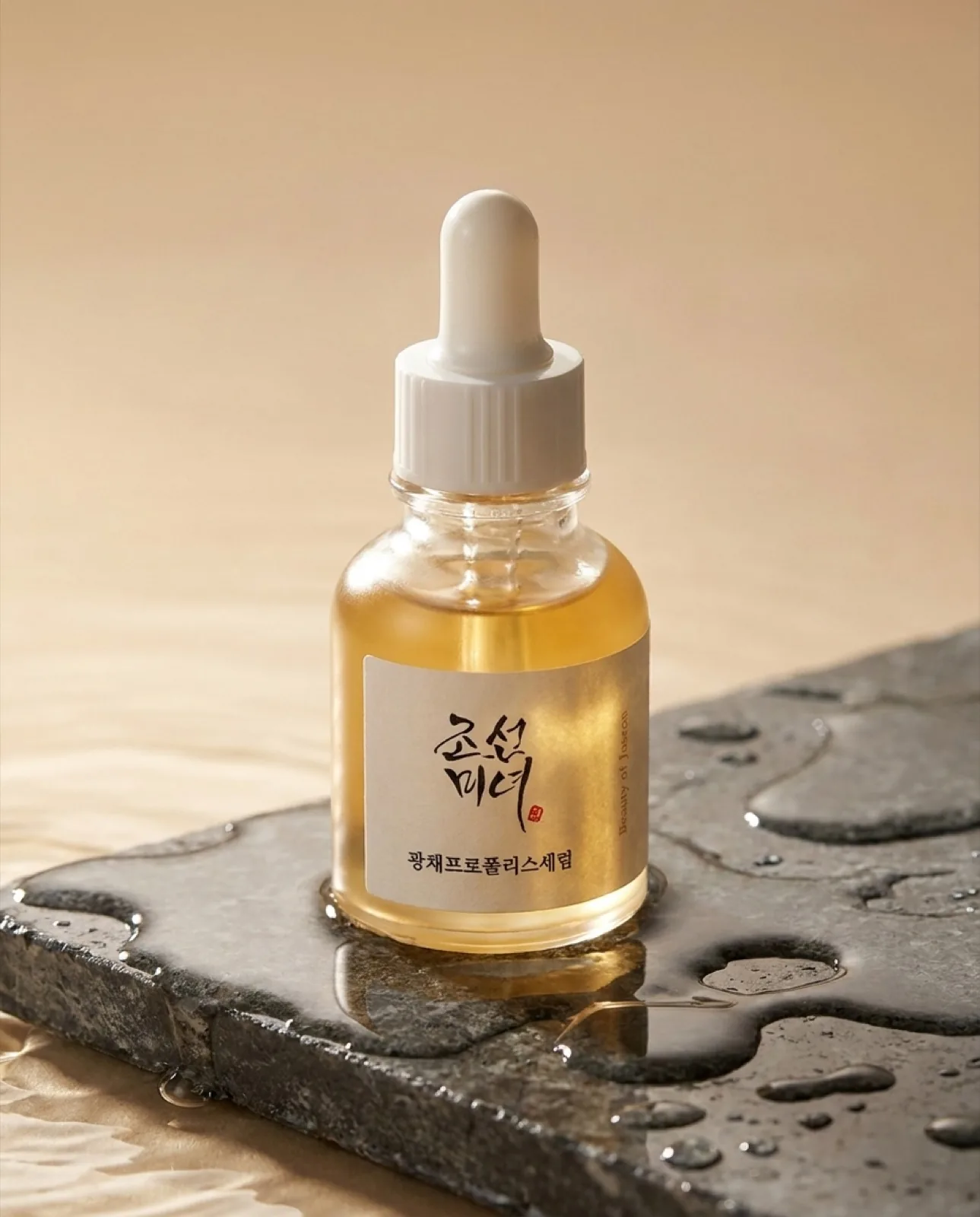
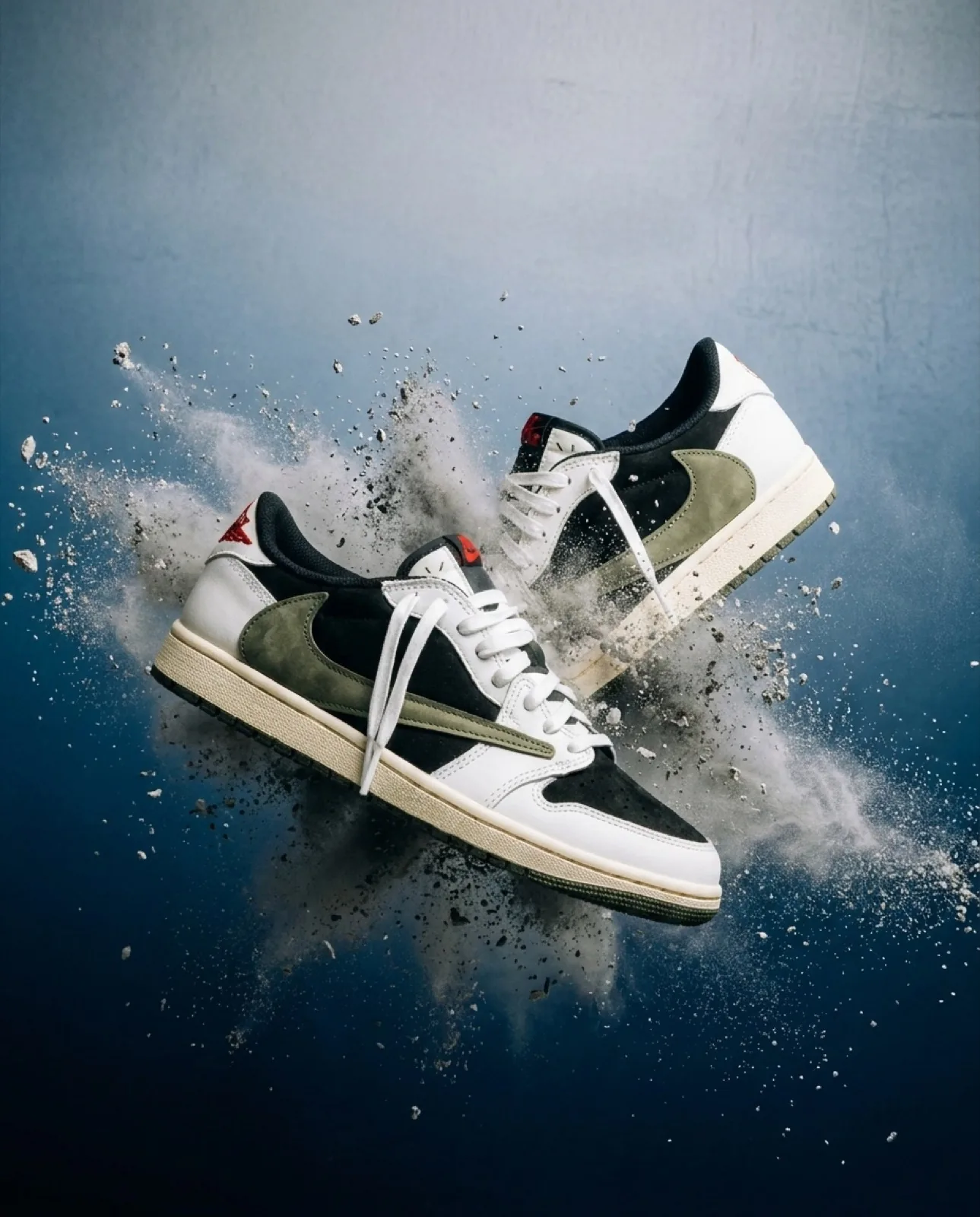
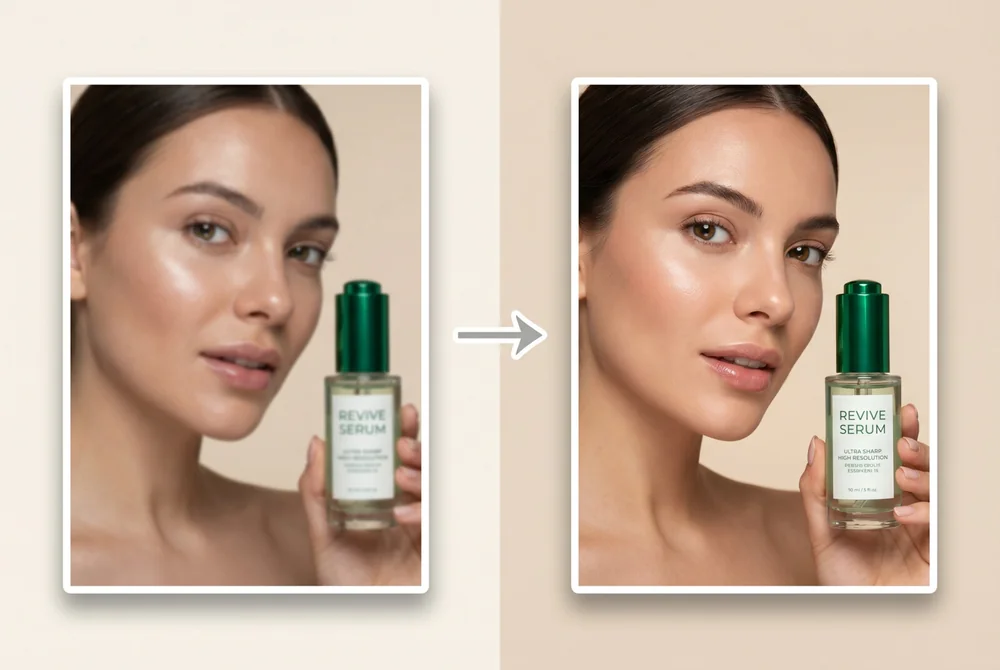
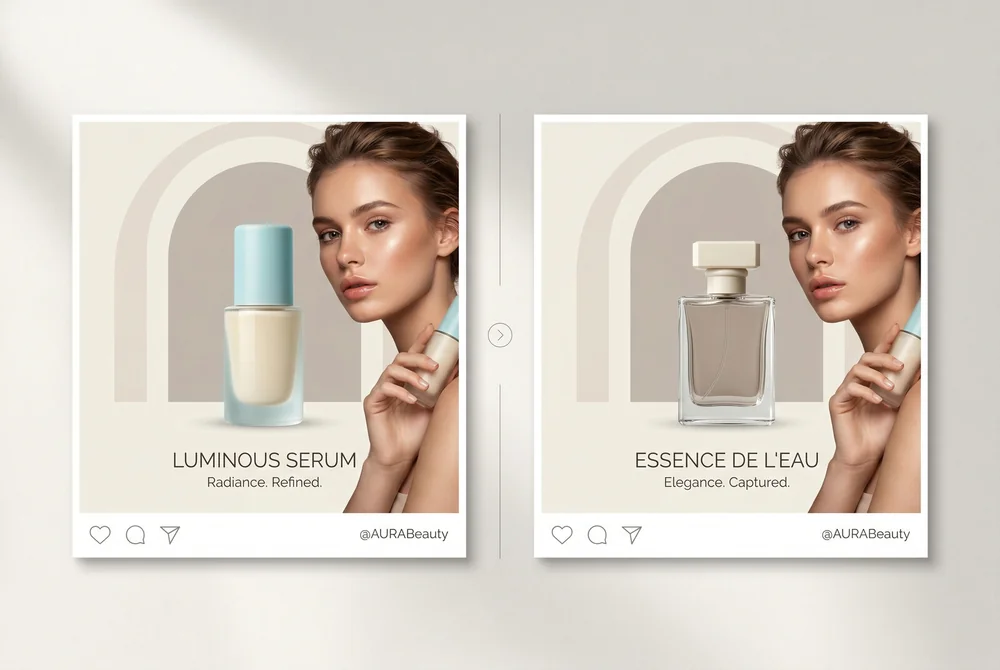
Four of the ten formats below. The first two are product creatives; the last two are tool screenshots used as examples of the mechanism, an Image Enhancer before/after and a Creative Remix side-by-side, not ads that ran on Meta.
The ranking reflects orders of magnitude observed on the accounts we run, not a public benchmark study: treat it as a starting order for your own tests. How the campaign is built around these creatives is covered in how to build the campaign around these creatives, and why testing them in volume moves the return is in how creative testing lifts ROAS.
#1: Authentic UGC (user-generated content)
A real person talks about the product to the camera, with a natural background, amateur lighting, and a spontaneous speaking cadence. The authenticity is simulated but perceived as real. It's the format that dominates Meta in 2026 for DTC and e-commerce brands.
How to produce it with AI: Build the spokesperson in Avatar Lab (in your dashboard), write the script in the Script step of Studio Video, then render with Kling 3.0 (1080p, 15 s, a real face accepted as reference) or Veo 3.1 when you want native audio in one pass. Voice & Dubbing (ElevenLabs) handles the voice and the language versions.
Watch out: A generated person must carry Meta's "AI info" label, and the EU AI Act transparency article (article 50) applies since August 2, 2026. Label it and keep the claims true; the format loses nothing from the label.
Concrete examples
- Skincare "before/after" testimonial as a vertical selfie
- Product unboxing with a genuine reaction
- Vlog-style testimonial, 15 to 30 s
#2: Product demo in action
The product is filmed being used in a real or idealized context. No speech, just a visual demonstration of the value. Very effective for products whose benefit is visible (tools, beauty, food, tech).
How to produce it with AI: Place the packshot in a scene with Product Studio (Studio Image), then animate it in Studio Video: Kling 3.0 for hands and product handling, Seedance 2.5 when the demo needs up to 30 seconds in a single pass.
Watch out: The product must stay geometrically identical from the first frame to the last. Check hands, reflections and labels before the ad goes live; a warped bottle is the fastest way to lose trust.
Concrete examples
- Before/after transformation in split screen
- Product zoom with a reveal effect
- Time-lapse of the product in action
#3: Before / after (transformation)
The most intuitive format in transformation marketing. Two images or two scenes showing the state before and after use. It instantly sparks curiosity and desire. Works in any industry where a visible change is possible.
How to produce it with AI: Start from one real photo and edit it, do not generate two unrelated images: FLUX Kontext or Nano Banana Pro in Studio Image keep the subject and change only what the product changes. Image Enhancer produces the clean "after" when the subject is the photo itself.
Watch out: Meta's personal health and appearance rules restrict before/after imagery that implies unrealistic results, especially on skin, weight and hair. Show a change the product can actually deliver, and keep the "before" honest.
Concrete examples
- Skin before/after a skincare routine
- A space before/after organizing
- Body shape before/after a fitness program
#4: Customer testimonial (social proof)
A customer quote, stars, rating, or review screenshot staged in a polished creative. Social proof is still one of the most powerful conversion levers. Especially when the reviews are specific and backed by numbers.
How to produce it with AI: Drop the real review text into Creative Designer with your Brand Kit applied for the static version; for the 8 to 12 second clip, an Avatar Lab presenter reads the review with Voice & Dubbing.
Watch out: Only real, verifiable reviews and ratings. An invented star count or a quote nobody wrote is both a Meta policy problem and a consumer law problem, and the audience can tell.
Concrete examples
- Animated 5-star review screenshot
- Customer quote over a product background
- Short video testimonial (8 to 12 s)
#5: Shock hook / problem
The creative opens on a shocking question, a surprising stat, or by naming a prospect's pain point out loud. You don't sell the product first. You grab attention by pinning down the problem precisely.
How to produce it with AI: Generate 20 hooks in Chat Me (Claude Sonnet 4.6 by default) from the product and the audience, keep the three most specific, and set them in Creative Designer as a large-type static or as the opening card of a 9:16 video.
Watch out: Every number in a hook needs a source you can show. "87% of women make this mistake" is a template, not a fact: replace it with your own data or a cited study, or turn it into a question.
Concrete examples
- "You're losing 3 hours a week because of this..."
- "87% of women make this mistake..."
- "Stop wasting money on your ads"
#6: Product comparison
Your product against the competition or against the traditional solution. A table or split-screen format makes the advantage immediately clear. Very effective for innovative or repositioned products.
How to produce it with AI: Creative Remix re-shoots your product and the "traditional way" in the same lighting and framing so the split screen compares products, not photography. Creative Designer builds the feature table version.
Watch out: Naming a competitor requires claims you can substantiate, and Meta rejects unsubstantiated superiority claims. Comparing against the generic old method is safer than against a named brand.
Concrete examples
- Price/quality comparison vs a competitor
- Our product vs the traditional method
- Feature table side by side
#7: Listicle / tips creative
The "3 mistakes / 5 tips / 7 reasons" format that delivers perceived value in a few seconds. The audience remembers the useful info AND associates the brand with expertise. Strong organic sharing potential.
How to produce it with AI: Write the list in Chat Me, then build one card per point in Creative Designer as a carousel, or as a 9:16 video with one point per scene in Studio Video. Content Series turns a list into a recurring weekly series.
Watch out: Legibility decides this format: under seven words per card, high contrast, and the brand only on the last card. A listicle that is really a sales pitch in disguise gets skipped.
Concrete examples
- "3 signs your cream isn't working"
- "5 things to do before launching an ad"
- "7 products for the perfect desk"
#8: Lifestyle and aspiration
The product is in the background: what's being sold is the lifestyle it embodies. Beauty, fitness, travel, luxury home... The creative sells a status or an identity. Works especially well for awareness and top-of-funnel retargeting.
How to produce it with AI: Product Studio places the real packshot into a generated scene, with Seedream 5.0 Pro or FLUX.2 for photorealistic environments and people; the Brand Kit keeps the palette and typography consistent across the batch.
Watch out: Photorealistic generated people fall under the same AI label rules as UGC. Keep the product the only real object in the scene and the scene plausible for your buyer; aspiration that looks like stock photography converts like stock photography.
Concrete examples
- Active woman with the product in an urban setting
- Premium home atmosphere
- Athletic performance
#9: Urgency and limited offer
Countdown, limited stock, flash sale. Scarcity and urgency remain effective conversion levers at the bottom of the funnel. Use sparingly to protect the brand's credibility.
How to produce it with AI: Creative Designer with the Brand Kit for the badge and the offer, Ads Variation to produce the same offer in several layouts, Creative Resizer to push it to every placement the same afternoon.
Watch out: Credibility is the whole game. A countdown that resets, a "final hours" badge that runs for a month or fake stock levels are misleading under Meta's rules and train your audience to ignore the next real offer. Use real dates and real limits.
Concrete examples
- Animated countdown timer
- "Final hours" badge
- Remaining stock highlighted
#10: Narrative storytelling
A three-act mini-story condensed into 15 to 30 seconds. Problem, discovery, transformation. A longer format, but with a strong impact on brand recall and retargeting conversion rate.
How to produce it with AI: Write the three acts in the Script step of Studio Video, then render with Seedance 2.5 (up to 30 seconds in one pass) or stitch Veo 3.1 shots of 8 seconds with native audio. Content Series builds a multi-episode arc from the same characters.
Watch out: Veo 3.1 stops at 8 seconds per generation, so a 30-second story is several shots that must match; and the hook still has to land in the first 3 seconds even in a story. Storytelling is not an excuse for a slow open.
Concrete examples
- Founder story: "why I created this product"
- Customer journey from struggle to solution
- Product mini-documentary
The two bottom-of-funnel formats at the top of this ranking, in motion. Both were generated in SociaLover: same vertical format, one built on a lived experience, the other on a verdict.
Benchmarks by format: what the data says
The third-party data points in the same direction as the ranking: UGC-style creative outperforms brand-produced creative on CTR and CPA, accounts that test in volume earn a higher ROAS, and static images still carry most conversions in many accounts. The figures below are reported by their sources, not measured by us, and ranges vary by vertical.
The same Digital Applied / Superscale reporting finds that accounts testing 20 or more creatives a month earn a markedly higher ROAS than accounts that test a handful, which is the real lesson of this ranking: the format matters less than the number of formats you put in front of the algorithm. If UGC-style is the family you are missing, produce UGC-style video with AI without a shoot, and read the UGC guide for what makes the format read as authentic in the first place.
Static vs video vs UGC: what to test first
Test one static, one product demo video and one UGC-style video in the same ad set first, then double down on the mechanism that wins, not on the format. Statics are the cheapest to produce and still convert; video earns attention; UGC-style earns trust. You need all three signals before you know which one your account is starving for.
The order we use with a new account: a product-on-clean-background static and a problem-hook static on day one, because they take minutes in Creative Designer and read the offer fast; a 9 to 15 second product demo on day two; two UGC-style videos with different hooks for the first 3 seconds on day three. Read the 3-day CTR on each, keep the family that wins and produce three variations of it.
Three tools shorten the loop. Save winning ads with the Ad Library extension so your next batch starts from formats that already run in your vertical; Ads Strategist reads your creatives and tells you which mechanism each one relies on, so a batch does not end up as four variations of one idea; and Creative Resizer pushes the winner to every placement without a second production pass.
How to choose your creative type based on the objective?
Awareness (top of funnel)
- Lifestyle and aspiration
- Narrative storytelling
- Shock hook / problem
Consideration (middle of funnel)
- Product demo
- Comparison
- Listicle / tips
Conversion (bottom of funnel)
- Authentic UGC
- Customer testimonial
- Urgency and limited offer
| Format | Funnel stage | What you actually produce | Where it is produced |
|---|---|---|---|
| #1 Authentic UGC | Conversion | Vertical video, 15 to 30 s | Avatar Lab + Studio Video (Kling 3.0 or Veo 3.1) |
| #2 Product demo in action | Consideration | Video with no speech: split screen, reveal or time-lapse | Product Studio, then Studio Video |
| #3 Before / after | Any stage | Two images, or a split screen | Studio Image (FLUX Kontext, Nano Banana Pro, Image Enhancer) |
| #4 Customer testimonial | Conversion | A staged review, or a short video of 8 to 12 s | Creative Designer, or Avatar Lab for the clip |
| #5 Shock hook / problem | Awareness | A single opening line, the copy carries the creative | Chat Me + Creative Designer |
| #6 Product comparison | Consideration | A split screen or a feature table | Creative Remix, Creative Designer |
| #7 Listicle / tips | Consideration | A numbered list: 3 mistakes, 5 tips, 7 reasons | Creative Designer, Content Series |
| #8 Lifestyle and aspiration | Awareness | A scene where the product sits in the background | Product Studio (Seedream 5.0 Pro, FLUX.2) |
| #9 Urgency and limited offer | Conversion | A countdown, a badge or a stock indicator over the creative | Creative Designer, Ads Variation |
| #10 Narrative storytelling | Awareness | A three-act story condensed into 15 to 30 s | Studio Video (Seedance 2.5, Veo 3.1) |
Frequently asked questions
- Which ad creative format works best on Meta in 2026?
- UGC-style video: a real-looking person talking about the product to camera, with a natural background, amateur lighting and a spontaneous cadence. Digital Applied / Superscale (2026) report about 48% higher CTR and 26% lower CPA for UGC-style creative than for brand-produced creative, with ranges that vary by vertical. The ranking here reflects orders of magnitude observed on the accounts we run, not a published benchmark study.
- Do static ads still work on Meta in 2026?
- Yes. According to GetHookd (2026), static images still drive 60 to 70% of conversions in many Meta accounts, and they remain the cheapest creative to produce and to iterate. Video earns attention and UGC-style earns trust, but a product-on-clean-background static or a problem-hook static belongs in every test batch. Ranges vary by vertical and by offer.
- What is the best ad format for e-commerce on Meta?
- For a catalog business, a product demo or a clean-background static feeding a dynamic catalog does the volume, and UGC-style video does the persuasion at the bottom of the funnel. Before/after works wherever the product changes something visible. Start with one of each in the same ad set and let the 3-day CTR decide where the next batch goes.
- Which format should a new brand start with?
- Two statics on day one (product on a clean background and a problem hook), a short product demo on day two, two UGC-style videos with different hooks on day three. Statics take minutes to produce and read the offer fast; the videos tell you whether attention or trust is what the account is missing. Produce three variations of the family that wins.
- How many creative formats should I run at the same time?
- At least three, one per mechanism: proof, demonstration and attention, with desire added once the first three have data. Digital Applied / Superscale (2026) report a markedly higher ROAS for accounts testing 20 or more creatives a month than for accounts that test a handful, so the practical answer is a weekly batch across several formats rather than one format at a time.
- How do I pick a creative type for my objective?
- For awareness, use lifestyle and aspiration, narrative storytelling or a shock hook. For consideration, use product demos, comparisons and listicles. For conversion, use authentic UGC, customer testimonials and urgency or limited-offer creatives.
- What is the difference between UGC and a customer testimonial?
- UGC is filmed as a lived experience: the person talks about their own use of the product, in a vertical selfie format, 15 to 30 seconds. A testimonial stages the proof itself. A quote, a star rating or a review screenshot placed inside a polished creative, or a short video of 8 to 12 seconds.
- Can these formats be produced with AI?
- Yes, and they map to different tools: still creatives such as before/after, comparisons, listicles or lifestyle scenes come out of Studio Image (Creative Designer, Product Studio, Creative Remix), video formats out of Studio Video (Kling 3.0, Veo 3.1, Seedance 2.5), and UGC out of Avatar Lab. Creative Resizer then re-cuts each one for every placement, and generated people carry the "AI info" label.
Conclusion
UGC-style video is still the king of formats on Meta in 2026, but the key to success is not using just one type. The top-performing advertisers constantly test multiple formats, analyze the data, and allocate their budget toward what converts; the accounts testing 20 or more creatives a month are the ones the third-party data singles out. Start with one format per mechanism and iterate. That is exactly what SociaLover is built for: producing the same angle in several creative formats. Visuals in Studio Image, video in Studio Video, UGC in Avatar Lab, then re-cutting them for every placement with Creative Resizer.