Comparing the Best AI Image Generation Models in 2026
FLUX.2, Nano Banana 2, GPT Image 2, Seedream 4.5, Midjourney V8, Ideogram 3... Which model should you choose for your use case? An in-depth comparison of quality, prompt fidelity, in-image text rendering, output resolution and speed.
SociaLover Team · Updated · 22 min read
In September 2026 the best AI image model for ads depends on the job: FLUX.2 for photorealistic product shots and prompt fidelity, GPT Image 2 and Ideogram 3 when words must appear inside the image, Nano Banana 2 or Nano Banana Pro for native 4K and editing, Midjourney V8.1 for art direction. We re-ran the same prompts on the current versions; here is what changed.

How did we compare the models?
We rated the six models on the advertising use cases we produce every week in Studio Image and scored each one out of 10 on six criteria: visual quality, prompt fidelity, text rendering, speed, output resolution and ease of use. The scores were first established in March 2026 and re-checked in September 2026 on the versions live at that date. The method is in the note below, and the routing that follows from it is the real subject of this article.
Visual quality
Rendering, consistency, detail
Prompt fidelity
How well it follows instructions
Text rendering
Legibility of words in the image
Speed
Average generation time
Output resolution
From 1K up to 4K depending on the model
Ease of use
Learning curve
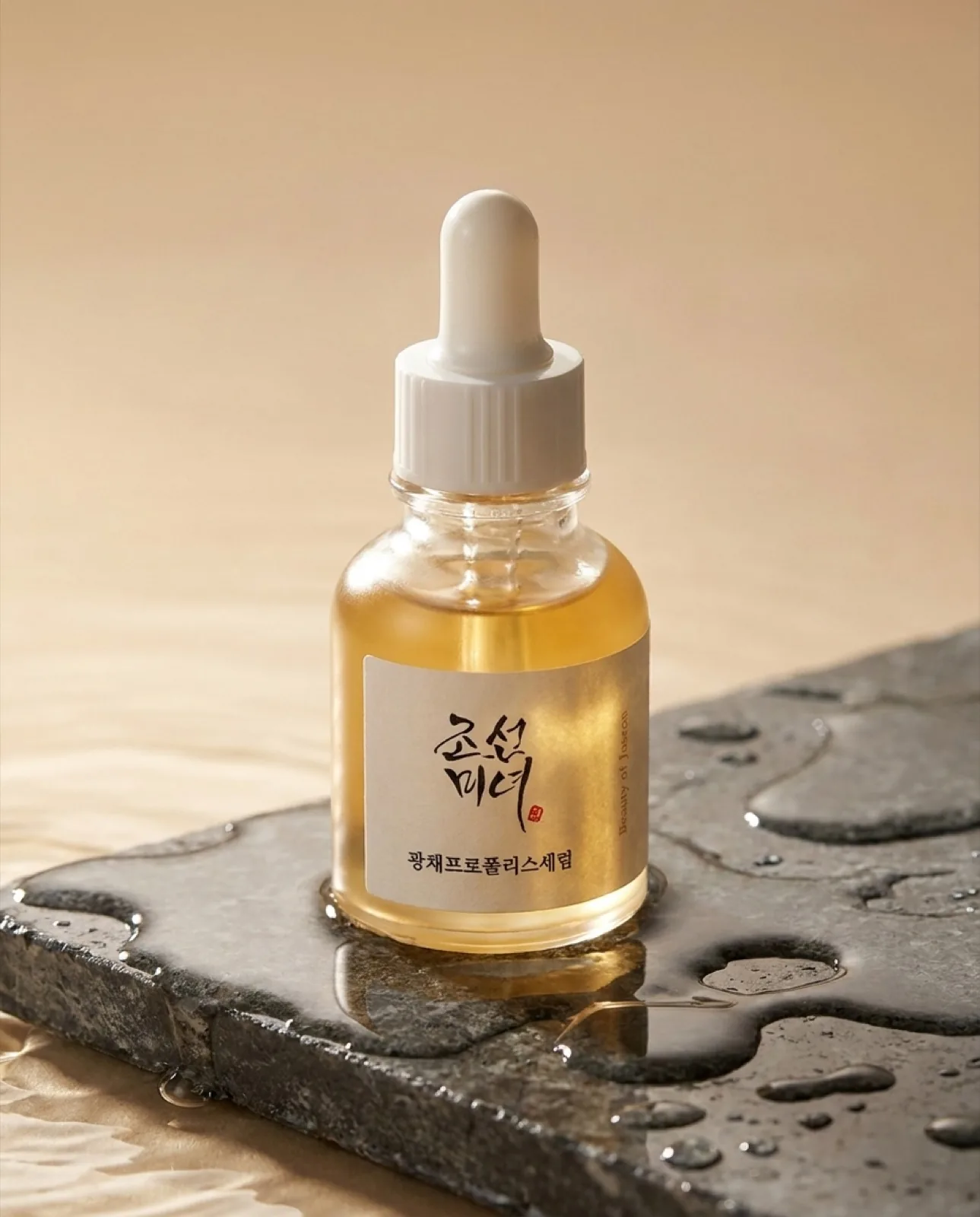
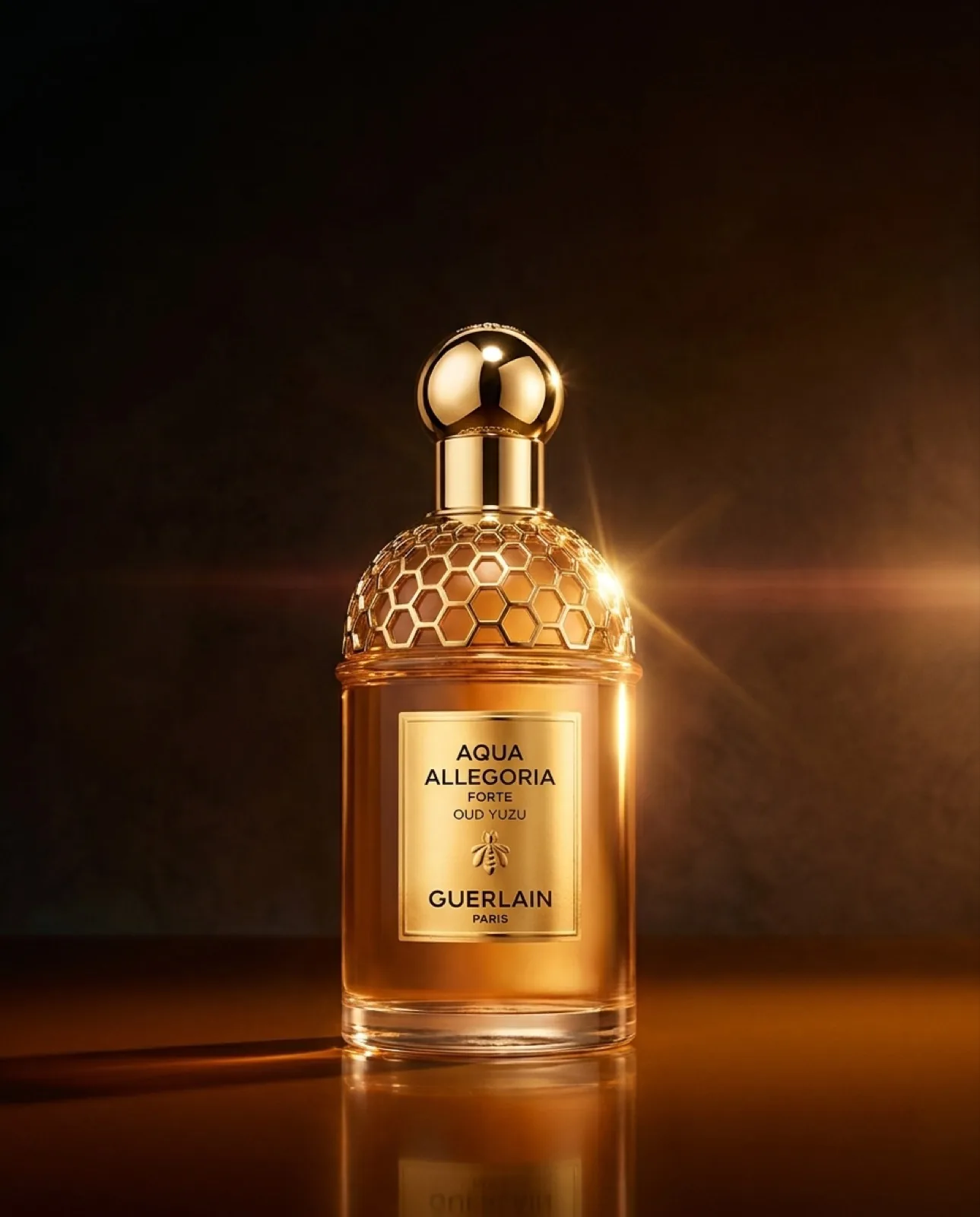

What each family of models does best. The photographic engines (FLUX.2, Seedream 4.5) win the studio packshot, where texture and prompt fidelity decide everything. The artistic engines (Midjourney V8.1) win staged and premium shots, judged on light and composition. The typographic engines (Ideogram 3, GPT Image 2, Nano Banana Pro) win anything with words in the frame. Creatives produced on SociaLover.
Is FLUX.2 the best model for product ads?
Yes, when the ad is a photograph of a real product: FLUX.2 scores highest of the lineup on visual quality (9.5) and prompt fidelity (9.2), and it is available in SociaLover in 1K and 2K. It is not the model to pick when words have to appear in the frame, and it tops out at 2K.
FLUX.2
Best for product shotsBlack Forest Labs
8.8
Average score
FLUX.2 is the current text-to-image model from Black Forest Labs, the founding team behind Stable Diffusion. It pairs exceptional photographic quality with remarkable prompt fidelity: anatomically consistent characters, sophisticated lighting and rich textures put it at the top of this comparison on the two criteria that decide a product shot.
In SociaLover the FLUX family is two models. FLUX.2 generates from text in 1K or 2K and accepts up to four reference images, which is how you keep the same product identical from one scene to the next. FLUX Kontext edits an existing visual from a plain-language instruction instead of generating a new one. FLUX 1.1 Pro and its Ultra raw mode remain on the Black Forest Labs API and are not offered in SociaLover; our FLUX prompt guide covers both.
Perfect for
- + High-fidelity ad visuals
- + E-commerce product photography
- + Portraits and brand visuals
- + Premium social content
Weaknesses
- - Text rendering in images lags behind Ideogram 3, Nano Banana Pro and GPT Image 2
- - Fewer "whimsical" artistic styles than Midjourney
- - Tops out at 2K; switch to Nano Banana 2 or Pro for native 4K
When should you use Ideogram 3?
Use Ideogram 3 whenever the words are part of the image: a headline, a price, a call to action. It scores 9.8 on text rendering, more than a point clear of the field. It is not available in SociaLover, where GPT Image 2 and Nano Banana Pro are the models that render text; the Midjourney vs FLUX vs Ideogram for ads comparison goes deeper on that split.
Ideogram 3
Best for textIdeogram AI
8.9
Average score
Ideogram 3 is hands down the champion of text integration in images. Where most models still struggle to render legible, well-formed letters, Ideogram produces crisp typography that is correctly spelled and aesthetically consistent with the rest of the composition. That is a decisive advantage when creating ad visuals, YouTube thumbnails, or social media posts.
Beyond text, Ideogram 3 excels at structured graphic compositions and the "flat design" styles that are so popular in digital marketing. Its streamlined interface makes it accessible to non-technical users, and its built-in prompt generator helps beginners phrase their requests. It scores 9.2 out of 10 on ease of use, behind only GPT Image 2 and Nano Banana 2.
Perfect for
- + Ad creatives with slogans and headlines
- + YouTube thumbnails and cover images
- + Instagram posts with built-in text
- + Logos and conceptual visual identities
- + Posters and event visuals
Weaknesses
- - Weaker on complex photographic scenes
- - Less realistic faces than FLUX.2
- - Not available in SociaLover (own platform and API)
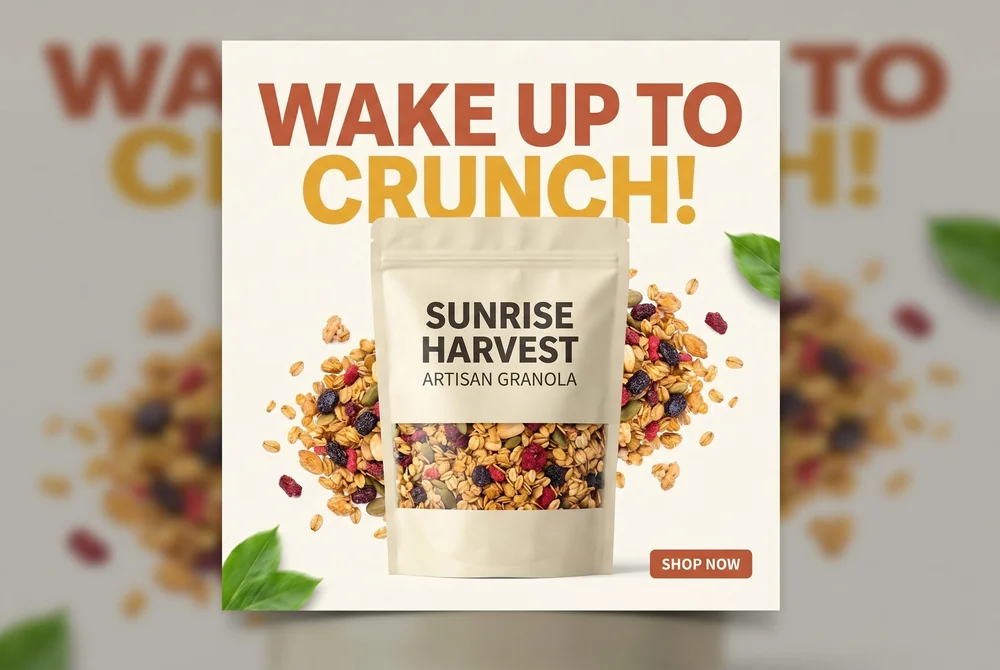
Why text rendering gets a column of its own in the scoring. On this creative the headline, the product name and the button are legible, correctly spelled and aligned with the composition, so the whole ad comes out of the generation finished. Most photographic models still return approximate letterforms at this size, which sends you back into a design tool to add the words afterwards.
Is Midjourney V8.1 still worth it for ads?
Yes, when the image has to be beautiful before it has to be exact. Midjourney V8.1 scores 9.3 on visual quality, second only to FLUX.2, and remains the reference for art direction and premium brand campaigns. It has no public API and is not available in SociaLover, so it stays a hands-on tool for the hero image rather than a production engine.
Midjourney V8.1
Best artistic styleMidjourney
7.8
Average score
Midjourney V8.1 remains the gold standard for aesthetic quality and visual originality. Every generation produces images with remarkable artistic cohesion, handling light, color and composition in a way that recalls the work of professional photographers and illustrators. The V8 generation significantly improved facial consistency and hand rendering, two long-standing weak points, and V8.1 is the version we re-checked in September 2026.
It sits at the premium end of the lineup for a comparable output size, and the absence of a public API keeps it out of automated workflows and out of SociaLover. For hands-on creation of premium visuals, Midjourney is still a must-have.
Perfect for
- + Art direction and moodboards
- + High-end brand campaigns
- + Editorial illustrations
- + Concept art and character design
- + Premium lifestyle photography
Weaknesses
- - No public API, so no automation and no availability in SociaLover
- - Less predictable than FLUX.2 for precise technical briefs
- - Mediocre text in images
Is Nano Banana 2 the model for native 4K and editing?
Yes. Nano Banana 2, Google's Gemini 3.1 Flash image model, renders natively in 1K, 2K and 4K and edits from an instruction, at roughly half the token price of Nano Banana Pro. Pro remains the higher-quality tier of the same family, also in 4K, and both are available in SociaLover.
Nano Banana 2
Best for native 4K8.9
Average score
Nano Banana is the name of Google's Gemini image models, and 2026 is the year the family became a serious advertising tool. Nano Banana 2 renders natively in 1K, 2K and 4K, follows long instructions closely, and accepts reference images, so a product photographed once can be re-placed in a new scene without being redrawn. It is also fast, which matters when you generate ten variations rather than one.
Nano Banana Pro is the top tier of the same family: the render to reach for when a creative has to hold up on a large screen or carry legible type, at about twice the token price of Nano Banana 2. The original Nano Banana stays in the catalog as a fast 1K draft model. In SociaLover you pick it from the model panel of Creative Designer, Text Clarity or Creative Remix, next to every other model of the catalog.
Perfect for
- + Native 4K creatives for large screens and print
- + Editing an existing visual from an instruction
- + Keeping one product identical across scenes with reference images
- + Fast batches of variations
Weaknesses
- - Photorealism a notch below FLUX.2 on textures and materials
- - Text rendering is good, but below Ideogram 3 and Nano Banana Pro
- - Refuses some prompts built on the exact face of a real person
Where does Seedream 4.5 fit?
Seedream 4.5 is the value option for lifestyle scenes: a photographic render on the same brief as FLUX.2, at a flat 6 tokens per image whether you output 2K or 4K. It is the second opinion worth asking for, and it is available in SociaLover next to Seedream V5 Lite and Seedream 5.0 Pro.
Seedream 4.5
Best value for lifestyleByteDance
8.6
Average score
Seedream 4.5 is ByteDance's photographic model, and it reads a lifestyle brief slightly differently from FLUX.2: warmer scenes, more staging, a more editorial interpretation of the same words. It starts at 2K (there is no 1K tier) and goes to 4K at the same flat token price, which makes it the cheapest way in the catalog to get a large render.
Two newer siblings sit next to it in SociaLover. Seedream V5 Lite adds web grounding and 4K output; Seedream 5.0 Pro fuses several reference images and edits an existing visual. All three accept a product photo as a reference, which is what keeps the packaging identical from one setting to the next.
Perfect for
- + Lifestyle scenes and styled table shots
- + A second render of the same brief next to FLUX.2
- + Large 4K outputs on a tight token budget
- + Multi-image fusion with Seedream 5.0 Pro
Weaknesses
- - No 1K tier, so no ultra-cheap draft
- - Text in the image below the typographic models
- - Fine detail such as watch dials still gets reinvented
When is GPT Image 2 the right choice?
Pick GPT Image 2 when the prompt is long and narrative, or when text has to appear on packaging or in a headline: it scores 9.1 on prompt fidelity and 8.5 on text rendering. In SociaLover its three quality tiers map to the 1K, 2K and 4K settings, from 4 to 32 tokens per image.
GPT Image 2
Best accessibilityOpenAI
8.8
Average score
GPT Image 2 is OpenAI's current image model: the one you get when you simply ask ChatGPT for a picture. Its strength is prompt comprehension. Describe a scene with a lot of contextual detail, relationships between characters, or a specific mood, and it generally returns the result closest to your original intent.
It also has the widest quality spread of the lineup, because quality is a parameter you choose: a low, a medium and a high setting, each a different render of the same prompt. In SociaLover those three tiers are the 1K, 2K and 4K settings, and the price follows. In practice you draft in low and ship in high. The previous generation, GPT Image 1.5, is still available as a fast 1K model.
Perfect for
- + Rapid prototyping and ideation
- + Complex prompts with lots of narrative context
- + Legible text on packaging and in headlines
- + API-based generation for third-party apps
Weaknesses
- - Content filters that are sometimes overly restrictive
- - Quality is a setting you have to pick: the low one is a draft, not a delivery
- - Weaker on ultra-realistic photographic styles than FLUX.2
What about Stable Diffusion 3.5 and Adobe Firefly 5?
Stable Diffusion 3.5 is the open-source option, and it is not available in SociaLover. You download the weights and run them on your own GPU, with 16 GB of VRAM or more for the best results, which gives you zero marginal cost at volume, total confidentiality and an ecosystem of LoRAs and ControlNets for highly specific styles. Out of the box, without finetuning, its output stays behind FLUX.2, and the technical learning curve rules it out for most marketing teams.
Adobe Firefly 5 is the legal-safety option, and it is not available in SociaLover either. It is trained on licensed content and comes with Adobe's commercial coverage, which is why large advertisers exposed to copyright litigation keep it in the stack, and Generative Fill in Photoshop remains one of the best implementations of generative AI inside an existing production workflow. In exchange you need an Adobe subscription, and its raw generation quality sits behind FLUX.2 and Midjourney V8.1.
Which model renders legible text in an image?
Ideogram 3 (9.8), Nano Banana Pro (8.7) and GPT Image 2 on its high setting (8.5) are the three models that reliably spell a headline, a price or a call to action inside the frame. FLUX.2 (7.8), Seedream 4.5 (7.6) and Midjourney V8.1 (6.5) return approximate letterforms at ad sizes. Since Ideogram 3 is not in SociaLover, the two to use there are GPT Image 2 and Nano Banana Pro.
Two practical consequences. First, generate the version that carries words on one of those models, and the silent version on FLUX.2 if photorealism matters more; the two can share the same reference image so the product stays identical. Second, when a creative has to carry a headline, a brand name or an offer, Text Clarity in SociaLover is the tool built for that job: pick Nano Banana Pro or GPT Image 2 in its model panel and spell the words in quotes. Our 50 ready-to-use ad image prompts include a section on leaving room for text.
What does one image cost per model?
In SociaLover one image costs between 4 and 36 tokens depending on the model and the resolution, and the price is shown on the generate button before you confirm. The table gives the token price displayed in the app on September 3, 2026 and its approximate dollar value at the entry plan rate (2,040 tokens for $30, about 1.5 cents per token). Larger plans include more tokens per dollar, so the same image costs less as you scale.
| Model | Resolution | Tokens per image | Approx. USD |
|---|---|---|---|
| FLUX.2 | 1K / 2K | 4 / 8 | $0.06 / $0.12 |
| FLUX Kontext (editing) | 1K | 6 | $0.09 |
| Nano Banana 2 | 1K / 2K / 4K | 10 / 15 / 23 | $0.15 / $0.22 / $0.34 |
| Nano Banana Pro | 1K or 2K / 4K | 20 / 36 | $0.29 / $0.53 |
| GPT Image 2 | 1K low / 2K medium / 4K high | 4 / 8 / 32 | $0.06 / $0.12 / $0.47 |
| Seedream 4.5 | 2K or 4K | 6 | $0.09 |
| Seedream V5 Lite / Seedream 5.0 Pro | 2K or 4K / 1K or 2K | 6 / 7 | $0.09 / $0.10 |
| Kling O3 Image / Kling V3 Image | 1K or 2K (O3 also 4K) / 1K or 2K | 5, or 9 in 4K / 5 | $0.07, or $0.13 in 4K / $0.07 |
| Recraft V4.1 / Z Image / Grok Imagine | 1K or 2K | 6 / 4 / 4 (Quality: 8, or 11 in 2K) | $0.09 / $0.06 / $0.06 to $0.16 |
The cheapest photorealistic render in the catalog is FLUX.2 at 1K, 4 tokens, which is why it is also the drafting model: iterate there, then re-render the winner in 2K or on Nano Banana 2 in 4K. Plans and token allowances are on the pricing page. Midjourney, Ideogram 3 and Firefly 5 are priced by their own subscriptions and are not part of this table.
How do the six models compare overall?
On the equally weighted mean, Ideogram 3 and Nano Banana 2 edge FLUX.2 by a tenth of a point, and the whole lineup sits within half a point. That is why the table below is a routing tool rather than a ranking: the highlighted row is our default for product ads, not the highest average.
| Model | Quality | Fidelity | Text | Speed | Price | Ease | Score |
|---|---|---|---|---|---|---|---|
| FLUX.2 TOP | 9.5 | 9.2 | 7.8 | 9 | 8.5 | 8.5 | 8.8 |
| Ideogram 3 | 8.8 | 9 | 9.8 | 8.5 | 8 | 9.2 | 8.9 |
| Midjourney V8.1 | 9.3 | 8.5 | 6.5 | 7.5 | 7 | 8 | 7.8 |
| Nano Banana 2 | 8.8 | 9 | 8.4 | 9.3 | 8.3 | 9.4 | 8.9 |
| Seedream 4.5 | 8.7 | 8.6 | 7.6 | 8.8 | 9 | 8.8 | 8.6 |
| GPT Image 2 | 8.6 | 9.1 | 8.5 | 8.7 | 7.8 | 9.8 | 8.8 |
Scored out of 10. Editorial scores, re-checked September 2026 (first pass March 2026). Ideogram 3 and Midjourney V8.1 are not available in SociaLover; the other four are.
Which model should you choose for your use case?
Route by what the image has to do: FLUX.2 for a product that has to look real, GPT Image 2 or Nano Banana Pro for a creative that carries words, Nano Banana 2 for anything that will be seen large, Midjourney V8.1 for the hero image that sets a look. The list below is the short version, use case by use case.
Ads and marketing creatives
FLUX.2 + GPT Image 2 or Nano Banana Pro
FLUX.2 for background visuals and product shots, GPT Image 2 or Nano Banana Pro for the versions with a headline and a price. Outside SociaLover, Ideogram 3 plays that second role. A reliable combination for an agency or a brand producing regularly.
Social media content (Instagram, TikTok)
Midjourney V8.1 or FLUX.2
Midjourney for premium, artistic positioning, on its own platform. FLUX.2 when you need volume and speed inside a production tool. Both are excellent for lifestyle and fashion visuals.
E-commerce product photos
FLUX.2, with Nano Banana 2 for 4K
Textures, materials and product staging with photographic realism make FLUX.2 the first choice for product pages and Shopping campaigns. Move to Nano Banana 2 when the visual has to hold up on a large screen or in print.
High-volume production and automation
FLUX.2 via API or Workflow Pro
For cloud automation without your own infrastructure, FLUX.2 is the most economical high-quality option, in 1K for drafts and 2K for delivery. For thousands of generations a day on your own GPUs, Stable Diffusion 3.5 (not available in SociaLover) offers zero marginal cost.
Agencies with legal concerns
Adobe Firefly 5 (not available in SociaLover)
Training on licensed content and Adobe's commercial coverage make it the conservative choice for large companies exposed to copyright litigation. It lives in Creative Cloud, not in a third-party tool.
Prototyping and fast ideation
GPT Image 2 on its low setting, or FLUX.2 at 1K
Easy access, contextual understanding and zero learning curve make GPT Image 2 the natural companion for brainstorming sessions. At 4 tokens per image, both drafting routes barely touch your plan.
You can run these models inside Studio Image without an API key for each vendor, and Creative Designer lets you switch model between two generations of the same brief. For the product-shot workflow step by step, read AI product photography without a studio.
Frequently asked questions
- Which AI image model produces the most realistic photographic images?
- FLUX.2, which scores 9.5 out of 10 on visual quality, ahead of Midjourney V8.1 at 9.3 and Nano Banana 2 at 8.8. Built by the founding team behind Stable Diffusion, it pairs anatomically consistent characters, sophisticated lighting and rich textures with the best prompt fidelity of the lineup at 9.2, which is what makes it the default for e-commerce packshots and product advertising.
- Which model writes legible text in an image?
- Ideogram 3, at 9.8 out of 10 on text rendering, followed by Nano Banana Pro at 8.7 and GPT Image 2 on its high setting at 8.5. FLUX.2 (7.8), Seedream 4.5 (7.6) and Midjourney V8.1 (6.5) still return approximate letterforms at ad sizes. In SociaLover, where Ideogram is not available, generate creatives with a headline or a price on GPT Image 2 or Nano Banana Pro.
- Which AI image model is available in SociaLover?
- As of September 2026: Nano Banana, Nano Banana Pro and Nano Banana 2 (Google), GPT Image 2 and GPT Image 1.5 (OpenAI), Seedream 4.5, Seedream V5 Lite and Seedream 5.0 Pro (ByteDance), FLUX.2 and FLUX Kontext (Black Forest Labs), Kling O3 Image and Kling V3 Image, Recraft V4.1, Grok Imagine and Grok Imagine Quality (xAI) and Z Image (Alibaba). Midjourney, Ideogram 3, Stable Diffusion 3.5 and Adobe Firefly 5 are not available.
- Is Midjourney available via API?
- No. Midjourney V8.1 has no public API, so it cannot be plugged into an automated pipeline or into a third-party tool such as SociaLover. You generate on its own platform, then hand the image to the rest of the production chain. For automated volume, FLUX.2 through the Black Forest Labs API or through Workflow Pro is the realistic alternative.
- Is Midjourney still worth it next to FLUX.2?
- Yes, when the image has to be beautiful before it has to be exact. Midjourney V8.1 scores 9.3 on visual quality, second only to FLUX.2, and remains the reference for art direction, moodboards and premium brand campaigns. The two trade-offs are its position at the premium end of the lineup and the absence of a public API, which rules it out of automated production and of SociaLover.
- Is Stable Diffusion 3.5 really free?
- The model itself is free: you download it and run it locally, so the only cost is your hardware, which gives you zero marginal cost at high volume. The counterparts are real. A GPU with at least 16 GB of VRAM for the best results, a steep learning curve for non-technical users, and out-of-the-box output that stays behind FLUX.2 without finetuning. It is not available in SociaLover.
- Which model is the safest legally for a large advertiser?
- Adobe Firefly 5. It is trained on licensed content and comes with Adobe commercial coverage, which makes it the conservative option for companies exposed to copyright litigation. In exchange you need an Adobe subscription, its raw generation quality stays behind FLUX.2 and Midjourney V8.1, and it is not available in SociaLover. Check the current Adobe terms before relying on that coverage.
- How often do these rankings change?
- We re-check the ratings every quarter and after any major model release, on the same advertising use cases. The scores in this article were re-checked in September 2026, after a first pass in March 2026. Expect the text-rendering column to move fastest, because it is where the labs are competing hardest, and expect availability in SociaLover to change as models are added or retired.
Conclusion
In 2026 there is no single "absolute best model", only models that are optimal for a given context. FLUX.2 is our recommendation for product shots and advertising photography thanks to its balance of quality, fidelity and price. GPT Image 2 and Nano Banana Pro take over the moment text needs to appear in the image, with Ideogram 3 as the specialist outside SociaLover. Nano Banana 2 is the native 4K option, Midjourney V8.1 remains irreplaceable for premium art direction, and Stable Diffusion 3.5 offers total freedom to those who master the technical stack.
The good news: you do not have to sign up everywhere. Studio Image on SociaLover puts FLUX.2, FLUX Kontext, Nano Banana Pro and Nano Banana 2, GPT Image 2, Seedream 4.5, Kling O3 Image and Recraft V4.1 behind a single interface and a single token balance. You pick the right model for each generation without juggling API keys.